
How Dental Implants Prevent Bone Loss
The effects of missing teeth go beyond cosmetic concerns. While many people focus on the cosmetic impact of tooth loss, the reality is that losing even a single tooth can create long-term oral health complications. One of the most significant issues associated with missing teeth is jawbone loss. Over time, this bone deterioration can change the shape of your face, weaken nearby teeth, and make activities like chewing and speaking more difficult.
At Cobblestone Park Family Dental, we provide dental implants in Oklahoma City to help patients restore their smiles, protect jawbone health, and improve long-term oral function. Beyond replacing missing teeth, dental implants effectively protect jawbone strength and help preserve your overall oral health for years to come.
If you’re missing one or more teeth, contact our team at Cobblestone Park Family Dental to learn whether dental implants are right for you.
What Causes Bone Loss After Tooth Loss?
Many patients don’t realize how closely connected missing teeth and jawbone loss truly are until changes in facial structure or oral function begin to appear. Teeth play an important role in maintaining the strength and density of the jawbone. Natural tooth roots stimulate the jawbone each time you chew, bite, or speak. This stimulation signals the body to continue maintaining healthy bone tissue.
Bone loss can begin quickly after tooth loss. In fact, patients may lose significant bone density within the first year after tooth loss. The longer the tooth remains unreplaced, the more severe the bone deterioration can become.
This is one reason why replacing missing teeth promptly is so important. Dental implants replace both the visible part of the tooth and the root beneath the gum line.
Why Dental Implants Are Different from Bridges and Dentures
Traditional tooth replacement methods, including removable dentures and dental bridges, restore your smile’s appearance but do not replace the tooth root. As a result, they cannot fully prevent jawbone loss.
Dental implants work differently. A major advantage of dental implants is that they prevent bone loss by stimulating the jawbone, similar to natural tooth roots.
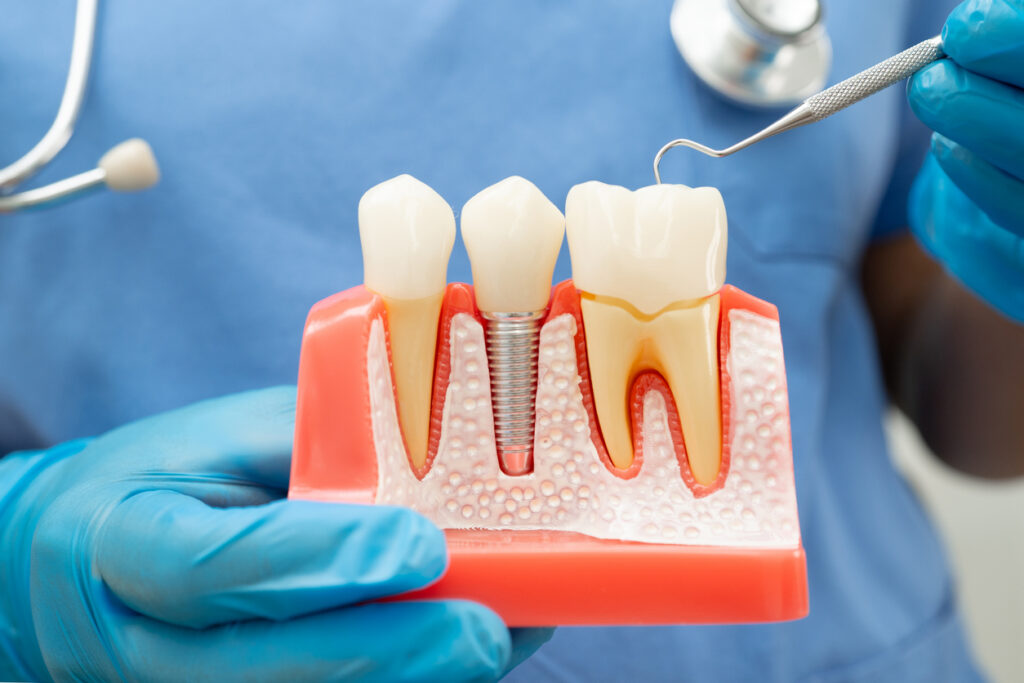
A dental implant consists of a titanium post surgically inserted into the bone. Over time, the implant fuses with the surrounding jawbone in a process called osseointegration. Once healed, the implant functions much like a natural tooth root, stimulating the jawbone whenever you chew or bite. This stimulation helps maintain bone strength and density.
The final restoration—a crown, bridge, or denture—is then secured to the implant to create a natural-looking and highly functional smile.
According to the American Academy of Implant Dentistry, implants are “the only dental restoration option that preserves natural bone, which helps stimulate bone growth.” Because implants replace the entire root of the tooth beneath the gumline, they help maintain the jawbone in a way that traditional options like dentures and bridges cannot.
To learn more about the full implant process, explore our resource: Your Complete Guide to Dental Implants.
How Bone Loss Changes Facial Appearance
Jawbone loss affects more than just oral health. It can also dramatically change your facial appearance over time.
The jawbone supports the facial muscles and facial skin. When bone begins to shrink, the face can take on a sunken or collapsed appearance. This often causes premature aging, including:
- Hollow-looking cheeks
- Wrinkling around the mouth
- Thinning lips
- Sagging facial skin
- A weakened jawline
Patients who wear traditional dentures for many years sometimes notice these facial changes because dentures remain on top of the gums and do not stimulate the jawbone.
Dental implants help maintain facial structure by preserving healthy bone beneath the gums.
This allows patients to retain a fuller, more youthful facial appearance while also improving the aesthetics of their smile.
How Dental Implants Improve Overall Oral Health
Replacing missing teeth with implants can help protect nearly every aspect of oral health.
Preventing Teeth From Shifting
When a tooth is lost, the surrounding teeth often drift into the space left by the missing tooth. This movement can cause bite problems, crooked teeth, and uneven wear on healthy enamel.
Dental implants help maintain proper tooth alignment, reducing the risk of future orthodontic or restorative issues.
Improving Chewing Ability
Missing teeth make chewing difficult and uncomfortable. Patients may begin to avoid certain foods, especially crunchy fruits and vegetables, or proteins that require more chewing effort. Dental implants restore bite strength and function, allowing patients to enjoy a vast range of foods comfortably. This can support better nutrition and overall wellness.
Supporting Gum Health
Gaps caused by missing teeth can create areas where food particles and bacteria collect more easily, increasing the risk of gum disease and infection. Dental implants help close these spaces and make oral hygiene easier to maintain.
Protecting Remaining Teeth
Unlike traditional dental bridges, implants do not require support from surrounding teeth. Nearby healthy teeth remain untouched and preserved, helping maintain long-term dental strength.
Why Dental Implants Look and Feel Natural
One of the reasons dental implants are so popular is that they closely mimic natural teeth.
Each implant restoration is custom-designed to match the size, shape, and color of the surrounding teeth. The result is a natural-looking smile that feels comfortable and natural.
Because implants are securely anchored into the jawbone, they also eliminate many of the frustrations associated with removable dentures, including:
- Slipping while speaking
- Difficulty chewing
- Adhesive use
- Gum irritation
- Clicking noises
Patients often report that implants feel so natural that they forget they even have them.
Who Is a Good Candidate for Dental Implants?
Many adults with missing teeth are good candidates for dental implants.
Ideal candidates generally have:
- Healthy gums
- Adequate jawbone density
- Good overall oral health
- A commitment to proper oral hygiene
Even patients who have experienced some bone loss may still qualify for implants with additional procedures such as bone grafting.
At Cobblestone Park Family Dental, every implant treatment begins with a comprehensive evaluation. Advanced imaging and detailed examinations help determine the best treatment plan for each patient’s needs.
Interested in a more stable, natural-looking tooth replacement option? Schedule a consultation with our team to explore dental implant solutions customized to your smile.
Patients concerned about cost may benefit from our Membership Club and other resources for affordable dental care without insurance.
Types of Dental Implant Solutions Available
Dental implants are versatile and customizable for different levels of tooth loss.
Single Tooth Implants
For patients missing one single tooth, an implant topped with a custom crown can restore both appearance and function. Learn more about our same-day porcelain crowns.
Implant-Supported Bridges
When several teeth are missing in a row, implants can support a bridge without relying on adjacent natural teeth.
Implant-Supported Dentures
Patients missing most or all of their teeth can benefit from implant-supported dentures. These restorations offer significantly greater stability and comfort than traditional removable dentures.
Full Arch Restoration
Advanced implant systems can replace an entire upper or lower arch of teeth with fewer strategically placed implants.
Dental Implants at Cobblestone Park Family Dental
Dental implant treatment occurs in several stages to ensure long-term success and stability.
Initial Consultation
Your dentist will evaluate your teeth, gums, and jawbone to determine if implants are the right option for you. Digital imaging and impressions may be taken during this appointment.
Implant Placement
The titanium implant post is inserted surgically into the jawbone. The area is then allowed to heal as the implant integrates with the bone.
Healing and Osseointegration
This healing process typically takes several months. During this time, the implant becomes securely fused with the jawbone.
Restoration Placement
Once healing is complete, the custom crown, bridge, or denture is secured to the implant to complete the smile restoration.
How to Care for Dental Implants Long-Term
Dental implants are long-lasting, but proper oral care is essential.
Fortunately, implant maintenance is very similar to caring for natural teeth.
Patients should:
- Brush twice daily
- Floss regularly
- Attend routine dental checkups
- Avoid smoking
- Practice good oral hygiene habits
Why Early Treatment Matters
Many patients delay replacing missing teeth because they assume it is only a cosmetic issue. However, waiting too long can lead to additional complications, including severe bone loss and shifting teeth.
Replacing a missing tooth early increases the chances of preserving healthy bone structure and preventing future oral health problems.
Restore Your Smile at Cobblestone Park Family Dental
At Cobblestone Park Family Dental, patients receive personalized care designed to restore oral health, comfort, and confidence. Dr. Jennifer Chambers and Dr. Cory Chambers have extensive experience helping Oklahoma City patients improve their smiles with advanced restorative dentistry solutions.
Whether you are missing a single tooth or several teeth, dental implants can provide a durable, natural-looking solution that supports both your smile and your long-term oral health.
If you are ready to learn more about how dental implants can prevent bone loss and protect your smile, schedule a consultation with Cobblestone Park Family Dental today.